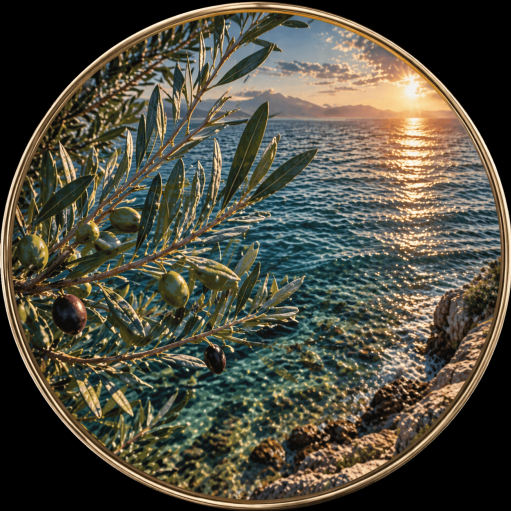
Where the Locals Eat
in Nea Moudania
A handpicked guide to the tavernas, mezze bars, and bakeries we'd send a friend to first
Most tourist guides to Halkidiki list the same five seafront restaurants — the ones with English menus, large terraces, and prices to match. This is not that guide.
Nea Moudania has something many resort towns lose: a year-round local population that demands real food. The bakeries open at 6 a.m. for fishermen returning to harbor. The tavernas serve grandmothers and bank clerks at lunch and tourists at dinner. The ouzo bars stay open late because that's when neighbors actually meet.
What follows is where we eat — and where we'd send you if you stayed with us. Some of these places have no website, no English menu, and no Tripadvisor presence. That's part of why they're worth finding.
For breakfast
Greeks don't really do breakfast. What they do is the morning ritual: a strong coffee, something from the bakery, eaten standing or carried to a bench by the sea. Adopt this rhythm and your day starts properly.
The traditional bakery (fournos)
Walk into any neighborhood fournos before 9 a.m. and order tyropita (cheese pie) or spanakopita (spinach pie) straight from the oven, still warm. The pastry should crackle when you bite it. A piece costs around €1.50–2.50. Pair it with a Greek coffee from the kafeneio next door.
The zacharoplasteio (sweet shop)
For the sweet morning, this is where you go. Order bougatsa — sheets of phyllo wrapped around either custard, cheese, or minced meat. The custard version is dusted with cinnamon and powdered sugar at the counter. Locals usually have it with a freddo espresso. About €3 with coffee.
The seaside cafés
If you want to sit and watch the morning unfold, the cafés along the seafront promenade open early and serve until late. A freddo cappuccino (the iced version, more popular than the hot one in summer) costs €3.50–4.50. Order it metrios (medium sweet) and you'll sound like you've done this before.
For lunch by the sea
The harbor area is lined with fish tavernas. Most of them are good. A few are excellent. The trick to telling them apart: look for handwritten daily specials in Greek (printed laminated menus in five languages = tourist trap), check whether the parking lot has Greek plates with the local "ΧΚ" prefix, and ask what came in fresh that morning rather than ordering off the menu.
What to order
Grilled octopus (chtapodi sti schara): The benchmark dish. Properly done, it should be charred on the outside, tender inside, and dressed simply with olive oil, oregano, and lemon. €12–18 per portion.
Whole grilled fish (psari sti schara): Sea bream, sea bass, or whatever came in that morning. Priced by weight (€45–60/kg for premium fish). One fish typically serves two. Ask the waiter to choose for you — they will be honest because they want repeat business from neighbors.
Fried small fish (gavros, marides): The locals' choice. Cheap (€8–12 per plate), eaten whole with the fingers, perfect with ouzo. If you only try one fish dish, make it this one.
Greek salad (horiatiki): Tomato, cucumber, onion, olives, oregano, a thick slab of feta on top, drenched in olive oil. There is no lettuce in a real horiatiki. Anywhere that adds lettuce is cooking for tourists. €8–10.
What to drink
House wine in a small carafe (karafaki) for €4–6 is almost always better value than bottled wine. Local tsipouro from Macedonia served chilled with mezedes is the regional ritual. €2–3 per shot.
If the menu is laminated and printed in five languages, walk past it. The good places make you ask what's fresh today.
For dinner with locals
The single biggest mistake tourists make in Greece: arriving for dinner at 7 p.m. The taverna will be empty, the staff will treat you politely but distantly, and you'll wonder what the fuss is about. Come back at 9:30 and the same place is alive — multi-generational Greek families at long tables, plates being passed, somebody's grandmother holding court.
The neighborhood mezedopoleio
Tucked into the residential streets behind the seafront, these small mezze bars are where the town actually eats. The format: a parade of small plates, each €4–9, ordered as you go. Start with three or four, share, order more as needed. Two people can eat very well for €25–30 with drinks.
Look for fava (split-pea purée with caramelized onions), tirokafteri (whipped feta with hot peppers), kolokithokeftedes (zucchini fritters), saganaki (pan-fried cheese with lemon), and htipiti (a spicier feta dip).
The classic taverna
The proper sit-down meal. Multiple courses, more wine, longer conversation. Order moussaka (eggplant and minced meat layered with béchamel), pastitsio (Greek lasagna), or kleftiko (slow-cooked lamb in paper) — all €12–16. Greek tavernas keep their best dishes off the menu's first page; ask what's been cooked that day.
The grill house (psistaria)
For meat. Souvlaki sticks, lamb chops, kontosouvli (skewered slow-roasted pork). Order by the kilo if you're a group. Pair with tzatziki, fries cooked in olive oil, and a beer. Filling, casual, fun.
For coffee & the slow afternoon
Greek café culture is a sport. A single freddo can occupy two hours. Don't be the visitor who orders one, finishes it in ten minutes, and asks for the bill. Settle in. Watch the harbor. Read.
The traditional kafeneio
Often older, often simpler, sometimes only frequented by men playing tavli (backgammon). Don't be intimidated — sit down, order a Greek coffee (specify metrios), and you'll be welcomed. €1.80–2.50 for a coffee that lasts an hour.
The seaside cafés
More polished, modern, with full menus. Best for the sunset hours, when the sea turns pink and the families start arriving for their volta (the evening promenade). Order an aperol spritz (€7–9) or a glass of local moschofilero wine and stay for two hours minimum.
For sweets & late-night
Dessert in Greece is rarely served in the restaurant. After dinner, locals walk to a separate place — usually a zacharoplasteio that stays open until midnight or later — for something sweet.
Loukoumades: Tiny fried dough balls drizzled with honey and cinnamon, sometimes with crushed walnuts. Crispy outside, soft inside. €5–7 for a generous portion shared between two.
Galaktoboureko: Custard wrapped in phyllo and soaked in syrup. Heavy, rich, the kind of thing that ends a meal definitively.
Pagoto kaimaki: A traditional Greek ice cream made with mastic and orchid root, with a unique chewy texture. If you find a place that makes it properly, order it.
Karpouzi (watermelon): In summer, the most local dessert of all. Ice-cold slices served with crumbled feta on the side. Sounds strange, works perfectly.
The Wednesday market (laiki)
Every Wednesday morning, Nea Moudania hosts its weekly open-air market. Local farmers, beekeepers, fishermen, and olive producers set up from roughly 7 a.m. to 1 p.m. Get there before 10 for the best selection.
What to buy: fresh tomatoes (from June onwards they taste like nothing in a supermarket back home), local olive oil pressed from Halkidiki olives, Halkidiki olives themselves (the large green variety is the regional pride), fresh feta wrapped in paper, jars of thyme honey, and dried oregano sold by weight.
If you're staying in an apartment with a kitchen, the market makes self-catered meals genuinely worth doing. Fresh bread from a fournos, market tomatoes, a slab of feta, oregano, olive oil, a glass of wine on your terrace — that's the meal locals would actually recommend.
Practical eating tips
- Eat late. Lunch from 2 p.m., dinner from 9 p.m. Going earlier means eating in an empty room.
- Bread and water are usually charged separately (€1–2 each) — this is normal, not a scam.
- Tipping is not expected the way it is elsewhere. Round up the bill or leave 5–10% if service was good.
- The "complimentary" sweet at the end of a meal — a small loukoumi, a fruit, a shot of liqueur — is a sign of a good taverna. Accept it.
- Cash is preferred at smaller tavernas, mezedopoleia, and bakeries. Cards work, but cash is faster and more appreciated.
- Don't ask to split the bill into separate cards. Greeks settle one bill and figure it out among themselves. Adopt the same approach.
- Order more dishes than you think you need. The waste is genuinely part of the hospitality — leftovers signal abundance, not failure.
One perfect day of eating
If you only have one day, this is how we'd structure it.
9 a.m. — Walk to a fournos for warm tyropita. Eat it on a bench by the harbor with a Greek coffee from the kafeneio next door.
11 a.m. — A long freddo cappuccino at a seafront café. Don't open your laptop. Watch the boats.
2:30 p.m. — Lunch at a fish taverna by the harbor. Order grilled octopus, fried gavros, horiatiki, and a small carafe of house white. Don't rush.
5 p.m. — Siesta. The town quiets down. So should you.
8 p.m. — A walk along the seafront. Watch families and grandparents on their evening volta.
9:30 p.m. — Dinner at a mezedopoleio in the back streets. Six small plates, a bottle of tsipouro, two hours minimum.
Midnight. — Loukoumades. Walk home along the sea. Sleep deeply.
Check availability →